Introduction
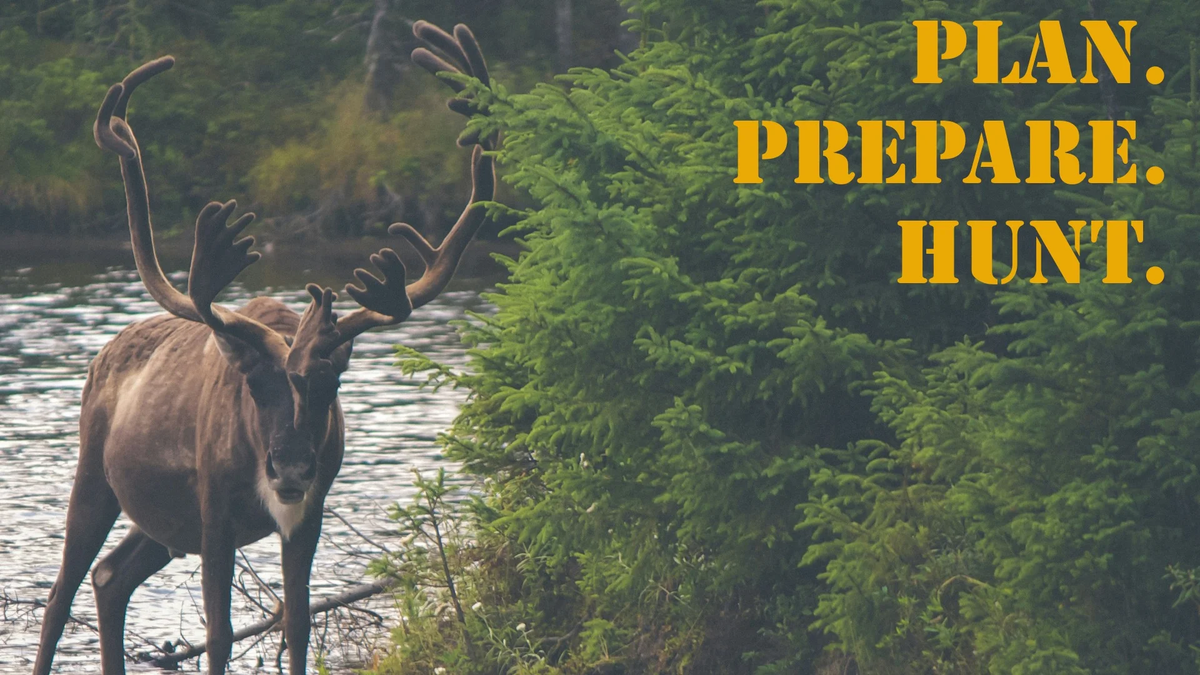
The caribou (Rangifer tarandus), also known as reindeer in Europe and Asia, is one of the most fascinating and resilient animals of the Arctic and subarctic regions. Renowned for their long migrations, unique adaptations, and deep cultural significance, caribou play a crucial role in their ecosystems and in the lives of indigenous peoples. Whether you're a wildlife enthusiast, conservationist, or hunter, learning about caribou enhances appreciation for these remarkable animals and the efforts to preserve them.
A Brief History of the Caribou
Caribou have roamed the Earth for thousands of years, evolving to withstand harsh climates and migrate across vast landscapes. Indigenous peoples of North America, such as the Inuit and First Nations, have relied on caribou for food, clothing, and tools, embedding them into traditions, folklore, and survival strategies. European explorers marveled at their endurance, and today, caribou remain an icon of the northern wilderness.
The Remarkable Traits of the Caribou
Caribou are equipped with extraordinary adaptations that allow them to thrive in some of the harshest environments on Earth:
- Size:
- Ranging from 150 to 600 pounds depending on the subspecies, males (bulls) are significantly larger than females, emphasizing their sexual dimorphism.
- Ranging from 150 to 600 pounds depending on the subspecies, males (bulls) are significantly larger than females, emphasizing their sexual dimorphism.
- Antlers:
- Uniquely among deer species, both males and females grow antlers, with bulls boasting larger and more intricate antler structures.
- Uniquely among deer species, both males and females grow antlers, with bulls boasting larger and more intricate antler structures.
- Hooves:
- Their broad, concave hooves serve as natural snowshoes, enabling them to traverse deep snow and soft tundra with ease while also aiding in digging for lichen.
- Their broad, concave hooves serve as natural snowshoes, enabling them to traverse deep snow and soft tundra with ease while also aiding in digging for lichen.
- Fur:
- Their dense, hollow-haired coat provides exceptional insulation against freezing temperatures and also grants buoyancy, allowing them to swim across rivers and icy lakes effortlessly.
- Their dense, hollow-haired coat provides exceptional insulation against freezing temperatures and also grants buoyancy, allowing them to swim across rivers and icy lakes effortlessly.
- Nasal Adaptation:
- Specialized nasal passages pre-warm the frigid air before it reaches their lungs, conserving body heat and aiding in survival during extreme winters.
- Specialized nasal passages pre-warm the frigid air before it reaches their lungs, conserving body heat and aiding in survival during extreme winters.
These impressive adaptations are a testament to the caribou's resilience, enabling them to endure and flourish across Arctic tundras and boreal forests.
Meet the family: Subspecies of Caribou
Alaska–Yukon Barren-Ground Caribou (Rangifer tarandus granti)
A wide-ranging Arctic migratory caribou, the Alaska–Yukon Barren-Ground Caribou travels vast distances across tundra, alpine plains, and boreal foothills of Alaska and northwestern Canada. Known for its long seasonal migrations and large herds, it relies heavily on lichens, sedges, and shrubs. Hardy, cold-adapted, and deeply tied to northern ecosystems, it is a cornerstone species of the Arctic wilderness.
Arctic Island Caribou (Rangifer tarandus pearyi)
One of the smallest and most cold-adapted caribou subspecies, the Arctic Island Caribou inhabits the high Arctic islands of northern Canada. With a pale coat that blends into snow and tundra, it survives extreme cold, deep snow, and limited forage by feeding on mosses, lichens, and sparse tundra plants. Isolated, resilient, and uniquely adapted, it embodies life at the edge of the Arctic world.
Central Canadian Barren-Ground Caribou (Rangifer tarandus groenlandicus)
A migratory caribou subspecies, the Central Canadian Barren-Ground Caribou roams the tundra and boreal foothills of northern Canada. Known for forming large herds that travel hundreds of miles each year, it feeds primarily on lichens, sedges, and shrubs. Hardy, cold-adapted, and integral to Arctic ecosystems, it plays a crucial role in northern food webs and indigenous cultures.
Greenland Caribou (Rangifer tarandus groenlandicus)
A hardy Arctic caribou subspecies, the Greenland Caribou inhabits the windswept tundra and rugged valleys of Greenland. Adapted to extreme cold and sparse forage, it relies on lichens, mosses, sedges, and dwarf shrubs to survive long winters. Stocky, sure-footed, and highly resilient, this caribou is a key herbivore of Greenland’s fragile Arctic ecosystems and a symbol of life in one of the world’s harshest environments.
Mountain Caribou (Rangifer tarandus caribou)
A rare and highly specialized woodland caribou ecotype, the Mountain Caribou inhabits deep-snow forests and alpine slopes of western Canada and the northern Rockies. Adapted to extreme winter conditions, it relies heavily on arboreal lichens found in old-growth forests. Large-bodied and long-legged, it is uniquely suited for traveling through deep snow, making it one of North America’s most distinctive and vulnerable caribou forms.
Quebec–Labrador Caribou (Rangifer tarandus caribou)
A large-bodied woodland caribou ecotype, the Quebec–Labrador Caribou inhabits the vast boreal forests, tundra margins, and river systems of eastern Canada. Known for forming sizable migratory herds, it relies on lichens, sedges, and shrubs throughout the year. Hardy and wide-ranging, this caribou plays a vital role in northern ecosystems and remains deeply connected to the cultural heritage of the region.
Woodland Caribou (Rangifer tarandus caribou)
A forest-dwelling form of caribou, the Woodland Caribou inhabits boreal forests, peatlands, and muskeg across Canada. Larger-bodied and more solitary than barren-ground caribou, it relies heavily on ground and arboreal lichens, especially during winter. Adapted to deep snow and dense cover, the Woodland Caribou is a key indicator of intact, undisturbed forest ecosystems.
Check out the Tier 1 Sportsmen YouTube!
Diet: What Do Caribou Eat?
Caribou are herbivores, uniquely adapted to survive in challenging environments with a diet that shifts according to the seasons:
- Spring and Summer:
- They graze on fresh grasses, shrubs, tender leaves, and vibrant flowers, taking advantage of the abundant vegetation during the warmer months.
- They graze on fresh grasses, shrubs, tender leaves, and vibrant flowers, taking advantage of the abundant vegetation during the warmer months.
- Fall:
- Their diet transitions to calorie-rich mushrooms, mosses, and bark, preparing them for the long, harsh winter ahead.
- Their diet transitions to calorie-rich mushrooms, mosses, and bark, preparing them for the long, harsh winter ahead.
- Winter:
- With most vegetation buried under snow, caribou rely heavily on lichens, commonly referred to as reindeer moss, which serve as their primary food source.
- With most vegetation buried under snow, caribou rely heavily on lichens, commonly referred to as reindeer moss, which serve as their primary food source.
A key survival trait is their ability to use their specialized hooves to dig through snow, uncovering lichens and other buried vegetation essential for enduring the winter's scarcity. This adaptability highlights their resilience in some of the planet's most extreme habitats.
The Social Traits and Behavior of the Caribou
Caribou exhibit fascinating social behaviors and survival strategies, making them one of the most iconic species in the animal kingdom:
- Epic Migrations:
- Renowned for their extraordinary endurance, they undertake annual migrations of up to 3,000 miles, one of the longest of any terrestrial mammal.
- Renowned for their extraordinary endurance, they undertake annual migrations of up to 3,000 miles, one of the longest of any terrestrial mammal.
- Herd Dynamics:
- For protection against predators, caribou form massive herds, sometimes numbering in the tens of thousands, creating a powerful collective presence.
- For protection against predators, caribou form massive herds, sometimes numbering in the tens of thousands, creating a powerful collective presence.
- Calving Season:
- During early summer, females isolate themselves to give birth, ensuring their vulnerable calves are safeguarded from predators like Wolves and bears.
- During early summer, females isolate themselves to give birth, ensuring their vulnerable calves are safeguarded from predators like Wolves and bears.
- Complex Communication:
- These animals rely on an intricate system of vocalizations, scent marking, and body language to convey information and maintain social cohesion.
- These animals rely on an intricate system of vocalizations, scent marking, and body language to convey information and maintain social cohesion.
- Seasonal Movements:
- Caribou display remarkable adaptability, migrating to higher elevations in summer to escape biting insects and descending to lower ground in winter to access food more easily.
- Caribou display remarkable adaptability, migrating to higher elevations in summer to escape biting insects and descending to lower ground in winter to access food more easily.
These behaviors highlight the caribou's resilience and complex social structure, ensuring their survival in some of the harshest environments on Earth.
The Diverse Range of the Caribou
Caribou are remarkable creatures, thriving in some of the most unforgiving climates on Earth. They are primarily found in:
- Arctic Tundra:
- Open, icy expanses that challenge their endurance and adaptability.
- Open, icy expanses that challenge their endurance and adaptability.
- Boreal Forests:
- Dense woodlands that provide crucial shelter and food.
- Dense woodlands that provide crucial shelter and food.
- Mountainous Regions:
- Rugged terrain where caribou showcase their agility and resilience.
- Rugged terrain where caribou showcase their agility and resilience.
- Northern Wetlands:
- Vital feeding grounds rich in vegetation and resources.
- Vital feeding grounds rich in vegetation and resources.
Their range spans across Canada, Alaska, Greenland, Scandinavia, and Russia, showcasing their adaptability to varying ecosystems. However, climate change and habitat destruction have significantly altered their distribution, confining many populations to smaller, fragmented territories. Despite these challenges, caribou continue to symbolize survival and adaptability in the face of environmental pressures.

Balancing the Scales: Caribou Populations and Conservation
Population Challenges Once numbering in the millions, caribou populations have seen significant declines due to a range of interconnected threats:
- Habitat Loss:
- Activities like logging, mining, and urban development disrupt critical migration routes, fragment habitats, and reduce access to key resources.
- Activities like logging, mining, and urban development disrupt critical migration routes, fragment habitats, and reduce access to key resources.
- Climate Change:
- Rising temperatures lead to changing food availability, delayed snow cover, and increased insect harassment, all of which place additional stress on caribou.
- Rising temperatures lead to changing food availability, delayed snow cover, and increased insect harassment, all of which place additional stress on caribou.
- Predation:
- Natural predators, such as wolves and bears, target vulnerable calves, while human overhunting in the past has further strained populations.
- Natural predators, such as wolves and bears, target vulnerable calves, while human overhunting in the past has further strained populations.
- Industrial Disturbances:
- Infrastructure developments, including roads and pipelines, interfere with migration patterns and create barriers within the caribou's range.
- Infrastructure developments, including roads and pipelines, interfere with migration patterns and create barriers within the caribou's range.
Conservation Success Stories Despite these challenges, concerted efforts have resulted in important conservation successes:
- Protected Reserves:
- Dedicated protected areas, established by governments and conservation organizations, safeguard critical habitats and allow caribou populations to recover.
- Dedicated protected areas, established by governments and conservation organizations, safeguard critical habitats and allow caribou populations to recover.
- Hunting Regulations:
- Strict hunting laws and controlled permitting systems have curbed overharvesting, helping to stabilize caribou numbers in many regions.
- Strict hunting laws and controlled permitting systems have curbed overharvesting, helping to stabilize caribou numbers in many regions.
- Indigenous-Led Conservation:
- Indigenous communities play a crucial role in the restoration and sustainable management of caribou populations, blending traditional knowledge with modern science.
- Indigenous communities play a crucial role in the restoration and sustainable management of caribou populations, blending traditional knowledge with modern science.
- Research and Monitoring:
- Advanced tools like GPS tracking provide valuable insights into migration patterns and population dynamics, enabling the development of evidence-based conservation strategies.
- Advanced tools like GPS tracking provide valuable insights into migration patterns and population dynamics, enabling the development of evidence-based conservation strategies.
By addressing these challenges and supporting ongoing conservation efforts, we can ensure the survival of caribou and the ecosystems they depend on for generations to come.
Fun Facts about Caribou
- Caribou are the only deer species where both males and females grow antlers, although females' antlers are smaller and less elaborate.
- These animals can run at speeds of up to 50 miles per hour, making them incredibly agile and swift.
- A single caribou can eat up to 12 pounds of food per day during the summer to store energy for the winter.
- Caribou's hollow-haired fur not only insulates them in freezing temperatures but also helps them float while swimming across rivers and lakes.
- They have the largest range of any land mammal, spanning across North America, Greenland, Scandinavia, and Siberia.
Closing Thoughts: The Legacy of Caribou
The caribou embodies the wild, untamed essence of the North, standing as a symbol of resilience and freedom. However, their survival depends on our collective efforts. Whether you're a hunter, conservationist, or simply a lover of nature, you can contribute to caribou conservation by:
- Supporting Conservation Organizations:
- Partner with groups dedicated to preserving caribou habitats and populations.
- Partner with groups dedicated to preserving caribou habitats and populations.
- Advocating for Habitat Protection:
- Champion policies that protect the tundra, forests, and wetlands critical to caribou survival.
- Champion policies that protect the tundra, forests, and wetlands critical to caribou survival.
- Respecting Hunting Regulations:
- Follow ethical hunting practices that ensure sustainable populations.
- Follow ethical hunting practices that ensure sustainable populations.
- Learning and Educating:
- Increase awareness about the challenges caribou face and share their importance within ecosystems.
- Increase awareness about the challenges caribou face and share their importance within ecosystems.
By uniting our efforts, we can ensure that caribou continue to roam the vast northern landscapes, inspiring future generations and maintaining their essential role in the natural world.
Last updated January 2026
Sources
U.S. Forest Service - Research & Development
Disclaimer: This content is provided for informational and entertainment purposes only. It may include personal opinions, user-generated input, or material created with the assistance of AI tools, and is not intended as professional advice of any kind. Tier 1 Sportsmen does not guarantee the accuracy, completeness, or reliability of any information provided. Always verify any hunting, safety, gear, or health-related information with qualified experts, and check all local laws and regulations before participating in any hunting activity. This site may contain copyrighted material, the use of which has not always been specifically authorized by the copyright owner. We believe that this constitutes a ‘fair use’ of the material in accordance with Title 17 U.S.C. Section 107. For full details, please review our Disclaimer, TOS, & Privacy Policy.