
Description
Barren Ground Grizzly (Ursus arctos)
A hardy northern form of the grizzly, the Barren Ground Grizzly roams the open tundra and Arctic plains of Alaska and Canada’s Northwest Territories. Smaller and lighter in color than coastal bears, it survives in one of the harshest environments on earth, feeding on roots, berries, ground squirrels, and the occasional caribou. Its resilience and fierce independence make it a true icon of the Arctic wilderness.
Aliases
Arctic Grizzly
High Artic Grizzly
Northern Grizzly
Tundra Grizzly
Associates
Central Canada Barren Ground Caribou
Western Canada Moose
Engagement Strategies
Call / Decoy Hunting
Spot & Stalk Hunting
Still Hunting
Effective Weapons
Centerfire Rifle
Compound Bow
Muzzle Loader
Recurve / Long Bow
Opportunity Assessment
Rating: Low
Population
-Naturally low-density populations spread across Arctic and subarctic tundra.
-Stable but limited by low productivity of tundra ecosystems.
Distribution
-Subspecies inhabit extremely remote regions of the Northwest Territories and Nunavut.
-Concentrated in open tundra, river corridors, coastal plains, and foothills above tree line.
Regulation
-Where legal, seasons are short with strict quotas, special permits, or Indigenous authorization.
- Guided hunts required for alien non-residents.
Demand
-Extremely high demand among serious bear and GSCO Slam chasers.
-Considered a pinnacle or once-in-a-lifetime grizzly opportunity.
Quick Threat
Rating: High
Terrain
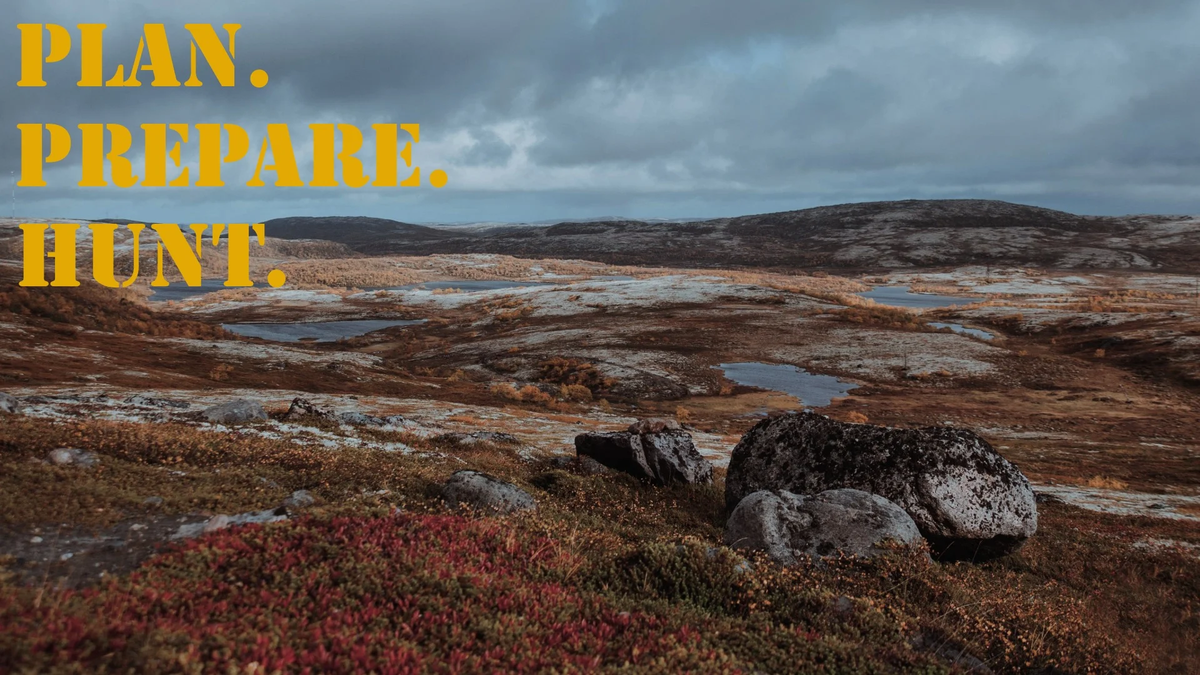
-Vast, treeless tundra with rolling hills, rocky ridges, wetlands, and braided river systems.
-Little natural cover; long stalks are fully exposed and physically demanding.
Weather
-Rapidly changing Arctic conditions with high winds, cold rain, snow, and sudden temperature drops.
-Visibility can deteriorate quickly due to fog, snow squalls, or blowing tundra dust.
Grit
-Extremely long glassing hours with low animal density and few daily encounters.
-Requires exceptional mental discipline, endurance, and tolerance for isolation and monotony.
Conflict
-Barren-ground grizzlies are highly alert and rely on eyesight in open country.
-Remote location magnifies consequences of injury, weather exposure, or equipment failure.
Mission Critical Gear
Apparel
-Waterproof breathable rain gear
-Insulated layers
-Waders or hip boots
-Gaiters
-Insulated Gloves
Accessories
-Sunscreen
-Sunglasses
Bait / Scent
Calls / Decoys
Dog / Falconry Gear
Electronics / Lights
-GPS
-Headlight
-Power bank
Footwear
-Heavy-duty waterproof boots
Game Care Gear
-Heavy-duty game bags
Kitchen / Hydration Gear
-Cold weather hydration gear
Knives / Tools
-Paracord
-Tarp
Nutrition
Optics
-High-quality binoculars
-Spotting scope
-Tripod
-Range Finder
Packs / Bags
-Chest or hip holster
-Food storage system
Shelter / Sleep System
Stands / Blinds
Survival / Aid Gear
-Bear spray
-First-aid Kit
-Compass
-paper maps
Watercraft
Skill Set Demands
-Bear Behavior
-Wind Reading
-Stalking
-Glassing
-Tracking
-Shot Placement
-Navigation
-Weather Reading
-Trophy Care
-Bear Aware
-Cold Weather
-Physical Fitness
-Mental Endurance
Physical Characteristics
Light, Frosted Coat Color
-Typically pale blond to light brown with silvery or “frosted” guard hairs, much lighter than most interior or coastal brown bears.
Tall Shoulder Hump
-Prominent muscular hump used for digging roots and ground squirrels, clearly distinguishing it from black bears and polar bears.
Long Legs & Lean Build
-Longer legs and a narrower, more athletic frame than coastal brown bears, adapted for covering vast tundra distances.
Straight Facial Profile with Short, Rounded Ears
-Concave-to-straight face profile and short, rounded ears that separate it from black bears (taller ears) and polar bears (longer neck and skull shape).
Characteristics of a Trophy
Massive Shoulder Hump Relative to Body Size
-In mature boars the hump is tall, wide, and well-defined, rising clearly above the line of the back even at distance—far more pronounced than on subadults.
Blocky, Wide Skull with Thick Muzzle
-Trophy boars show a broad, square head with a thick, blunt muzzle and wide-set eyes, lacking the narrow, pointed face common in younger bears.
Long, Heavy Forearms with Visible Muscle Definition
-Mature bears display thick forearms and wrists with heavy muscle and bone structure, giving the front end a powerful, loaded appearance.
Overall Proportions: Big Head, Short-Looking Ears
-On mature trophies, the ears appear small and low against the head due to skull mass—one of the most reliable visual indicators separating old boars from immature bears.
Diet
Protein
-Moose
-Caribou
-Deer
-Ground squirrels
-Marmots
-Beavers
-Rodents
-Ants
-Beetles
-Larvae
-Whitefish
-Artic Char
-Lemmings
-Ground-nesting birds
-Waterfowl eggs
-Scavenge carcasses
Vegetation
-Blueberries
-Crowberries
-Bearberries
-Cranberries
-Other edible roots
-Willow shoots and leaves
-Sedges and grasses
Field Behavioral Patterns
Social Dynamics
-Predominantly solitary outside of breeding season and family groups.
-Sows travel with cubs for 2–3 years; strong maternal defense behavior.
-Limited social tolerance due to low food density; brief tolerance may occur at concentrated food sources (caribou crossings, carcasses).
-Minimal dominance displays compared to coastal bears; avoidance is more common than confrontation.
Reproductive Behavior
-Breeding occurs from late May through June.
-Delayed implantation; cubs are born in winter dens between January and February.
-Litter size typically 1–3 cubs.
-Sows aggressively avoid adult boars during and after breeding to reduce infanticide risk.
Movement Patterns
-Extremely wide-ranging; individuals may cover dozens of miles per day in open tundra.
-Movement strongly tied to caribou migrations, berry availability, and seasonal green-up.
-Frequent use of ridgelines, eskers, river systems, and open flats for travel and visibility.
-Bears often bed on elevated terrain to monitor surroundings and detect scent.
Human & Hunting Pressure
-Highly aware and visually alert in open terrain; quick to detect movement at long distances.
-Avoids human presence by shifting travel routes rather than abandoning large areas.
-Pressure increases nocturnal movement or pushes bears into low-lying drainages, broken terrain, or expansive tundra flats with long sightlines.
-Once disturbed, bears may relocate rapidly and cover significant ground, making follow-up difficult.
Reconnaissance
Morning
-Glass elevated terrain immediately; bears often remain active through early daylight after feeding all night.
-Focus on ridgelines, eskers, drumlins, riverbanks, and gravel bars that provide travel efficiency and visibility.
-Watch for bears moving with purpose—long, steady travel often indicates feeding or relocation rather than bedding.
-Pay close attention to wind direction; bears frequently position themselves to scent-check large basins at first light.
-Scan open tundra flats for subtle movement; dark shapes are easier to detect when the sun is low.
Mid-Day
-Shift focus to bedding zones: lee sides of ridges, elevated knobs, gravel bars, and high ground with commanding views.
-Bears may bed in the open rather than cover—glass slowly and methodically for shapes, shadows, and color breaks.
-Watch for short feeding loops near bedding areas, especially in berry patches or green-up zones.
-Use this time to map travel corridors linking feeding areas, water crossings, and terrain funnels.
-Monitor weather changes; approaching fronts or increasing wind can trigger early movement.
Evening
-Bears become increasingly active as temperatures drop and light softens.
-Focus on caribou trails, river crossings, salmon-free gravel bars, berry flats, and insect-rich tundra.
-Expect long-distance movement—bears may appear suddenly from far terrain and close ground quickly.
-Glass into the wind when possible; bears often move upwind during evening travel.
-Track direction of travel carefully—predict where the bear will be, not where it is.
Tips
-Prioritize optics over movement—long glassing sessions outperform aggressive hiking in open tundra.
-Use terrain features to stay concealed; even slight rises can break a bear’s line of sight.
-Plan stalks around wind first, terrain second, distance last.
-Expect bears to cover ground fast—hesitation often equals missed opportunity.
-Always account for visibility and bear approach routes when observing feeding areas.
Theater of Operation
-Northwest Territories, CA
-Nunavut Territories, CA
Slams & Awards
Grand Slam Club Ovis
-Super 10
-Super 25
-Super 40
-Super 50
-Super Slam
-Youth 3
Safari Club International
-Alternative Methods 24
-Animals of North America
-Animals of North America (Bow)
-Bears of the world
-Global Hunting Award
-Hunting Achievement Award
-Multiple Methods
-North American 12
-North American 29
-Predators of the world
-Top Ten Award
Records
Safari Club International
North America - Free Range
Firearms
Bronze - 20"
Silver - 21-12/16”
Gold - 22-6/16”
Bow
Bronze - 17”
Silver - N/A
Gold - 21-15/16"
Boone & Crockett Club
Qualifies under Grizzly Bear
Awards - 23"
All-Time - 24"
Pope & Young
Qualifies under Grizzly Bear
Records - 19"
Sources
Disclaimer: This content is provided for informational and entertainment purposes only. It may include personal opinions, user-generated input, or material created with the assistance of AI tools, and is not intended as professional advice of any kind. Tier 1 Sportsmen does not guarantee the accuracy, completeness, or reliability of any information provided. Always verify any hunting, safety, gear, or health-related information with qualified experts, and check all local laws and regulations before participating in any hunting activity. This site may contain copyrighted material, the use of which has not always been specifically authorized by the copyright owner. We believe that this constitutes a ‘fair use’ of the material in accordance with Title 17 U.S.C. Section 107. For full details, please review our Disclaimer, TOS, & Privacy Policy.