
Description
Alaska Brown Bear (Ursus arctos gyas)
Among the largest brown bears in the world, the Alaska Brown Bear thrives along the state’s southern coasts and islands, where salmon runs and rich vegetation provide abundant food. Its immense size, thick dark coat, and commanding presence make it a dominant predator and scavenger of the Alaskan wilderness, embodying the raw power and grandeur of North America’s last great frontier.
Aliases
Alaskan Brown Bear
Brown Bear
Coastal Brown Bear
Peninsula Brown Bear
Associates
Alaska-Yukon Moose
Barren Ground Grizzly
Grizzly Bear
Engagement Strategies
Call / Decoy Hunting
Spot & Stalk Hunting
Still Hunting
Effective Weapons
Centerfire Rifle
Compound Bow
Muzzle Loader
Recurve / Long Bow
Opportunity Assessment
Rating: Medium
Population
-One of the strongest brown bear populations globally.
-Healthy age structure with consistent trophy-class animals.
Distribution
-Broad range across coastal Alaska, Kodiak, the Alaska Peninsula, and interior drainages.
-High concentrations near salmon streams, coastal flats, and tundra feeding zones.
Regulation
-Strictly regulated with limited harvest quotas and controlled seasons.
-Permit systems and species identification rules demand careful compliance.
Demand
-Among the most sought-after big game hunts in North America.
-High global demand due to size, challenge, and prestige.
Quick Threat
Rating: High
Terrain
-Thick alder, salmonberry, and willow limit visibility and escape routes.
-Slick riverbanks, tidal flats, boulder fields, and muskeg increase fall risk.
Weather
-Rapidly changing conditions with heavy rain, wind, fog, and snow possible any day.
-Cold, wet exposure accelerates fatigue and hypothermia risk.
Grit
-Long days under heavy packs in wet, uneven terrain.
-Sustained focus required due to constant bear presence.
Conflict
-Close-range encounters in dense cover or along salmon streams.
-High aggression when bears defend cubs, carcasses, or feeding areas.
Mission Critical Gear
Apparel
-Waterproof breathable rain gear
-Insulated layers
-Waders or hip boots
-Gaiters
-Insulated Gloves
Accessories
Bait / Scent
Calls / Decoys
Dob / Falconry Gear
Electronics / Lights
-GPS
-Headlamp
Footwear
-Heavy-duty waterproof boots
Game Care Gear
-Heavy-duty game bags
Kitchen / Hydration Gear
Knives / Tools
Nutrition
Optics
-High-quality binoculars
-Spotting scope
-Tripod
-Range Finder
Packs / Bags
-Chest or hip holster
-Food storage system
Shelter / Sleep System
Stands / Blinds
Survival / Aid Gear
-Bear spray
-First-aid Kit
-Compass
-paper maps
Watercraft
-None
Skill Set Demands
-Bear Behavior
-Wind Reading
-Scent Management
-Stalking
-Glassing
-Tracking
-Shot Placement
-Tracking
-Navigation
-Map Reading
-Weather Reading
-Trophy Care
-Bear Aware
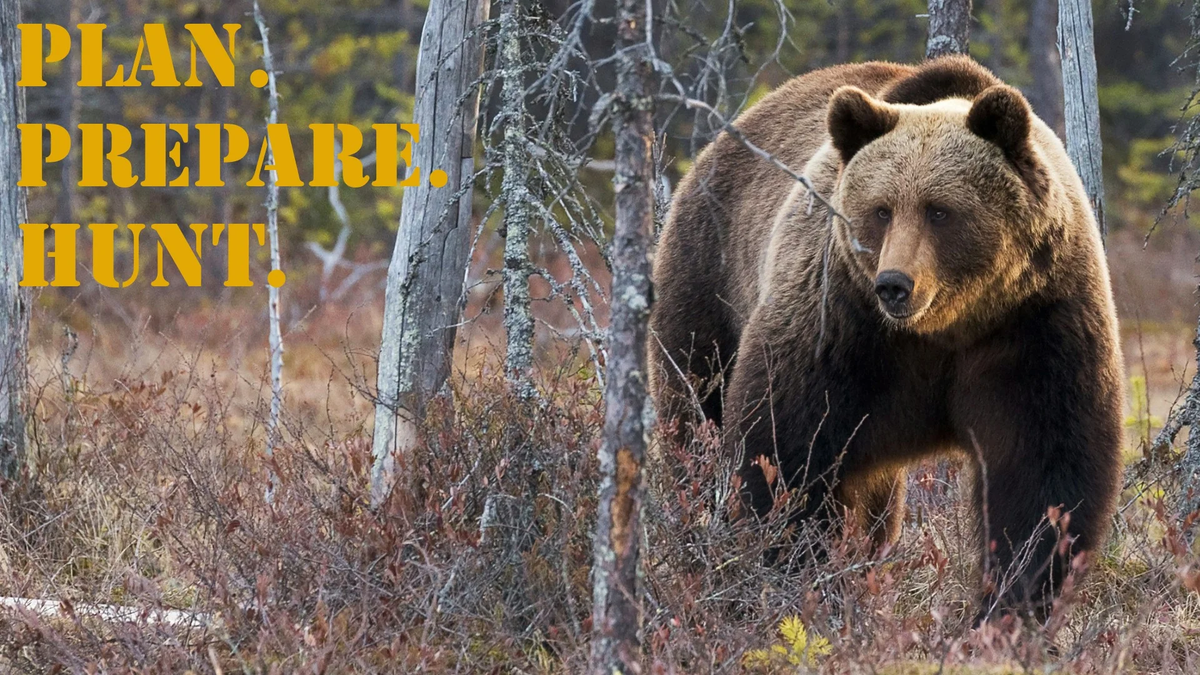
Physical Characteristics
Prominent shoulder hump
-Alaska brown bears have a large, muscular shoulder hump used for digging, far more pronounced than black bears and most interior grizzlies.
Large, blocky head and broad skull
The head is wide with a deep, dish-shaped face and powerful jaw structure, distinguishing them from narrower-headed grizzlies and black bears.
Massive body size and heavy bone structure
Alaska brown bears are among the largest bears on Earth, with thick legs, huge paws, and a deep chest that clearly separates them from smaller subspecies.
Variable brown-to-blonde coat with grizzled tips
-Fur color ranges from dark chocolate to light blond, often with silvered or “grizzled” guard hairs, unlike the more uniform coats of black bears.
Characteristics of a Trophy
Massive shoulder hump and front-end depth
-A true trophy boar shows a tall, rounded shoulder hump and heavy forequarters that tower above the neck and head, unlike the flatter profile of younger bears.
Blocky head with a wide, dish-shaped face
-Mature trophies have a broad skull, thick muzzle, and deep-set eyes that look small and far apart; immature bears appear narrow-faced and “long-nosed.”
Ears set low and far apart
-On a big bear, the ears look small, rounded, and widely spaced on the head, a key field-judging cue that separates mature boars from younger specimens.
Heavy, ground-dragging appearance with slow movement
-Trophy bears look low to the ground, thick through the chest and hips, and move deliberately, while immature bears appear taller, leggier, and quicker in motion.
Diet
Protein
-Salmon
-Moose
-Caribou
-Deer
-Ground squirrels
-Marmots
-Beavers
-Rodents
-Ants
-Bees
-Larvae
-Trout
-Char
Vegetation
-Salmonberries
-Blueberries
-Crowberries
-Huckleberries
-Cranberries
-Skunk cabbage
-Lilies
-Spring growth
-Apples
-Mountain ash berries
-Acorns
-Scavenge carcasses
-Other edible roots
Field Behavioral Patterns
Social Dynamics
-Generally solitary, except sows with cubs or during salmon-rich feeding aggregations.
-Dominance hierarchy exists around prime feeding areas; mature boars assert rank with size, posturing, and bluff charges.
-Sows with cubs are highly protective, using thick cover or bluff charges to keep threats away.
-Bears communicate through tracks, scat, rub trees, and scent marks, helping identify activity zones.
Reproductive Behavior
-Rut occurs from late May to early July; males actively seek receptive females and may fight rival males.
-Mature boars use size and intimidation rather than prolonged fights; minor scuffles are common.
-Sows with cubs will isolate themselves in secure cover, often away from feeding corridors.
-During rut, mature males may expand home ranges temporarily, cruising multiple feeding sites.
Movement Patterns
-Dawn and dusk: peak activity for feeding in salmon streams, berry patches, and tidal flats.
-Midday: rest in shaded slopes, dense alder, spruce bottoms, or small valleys.
-Travel routes are often consistent year-to-year, following ridges, creek corridors, and lowland flats.
-Seasonal shifts: bears move inland or to higher elevations in spring; concentrate near salmon rivers in summer and coastal berry patches in late summer/fall.
-Mature boars may appear suddenly and vanish into cover; tracking requires patience and careful observation.
Human & Hunting Pressure
-Bears under hunting or human presence become highly cautious, often moving at night or during fog, rain, and low visibility.
-Mature boars retreat to remote, rugged terrain: cliffs, dense alder tangles, and isolated river benches.
-Repeated disturbance may force bears to change travel routes or avoid traditional feeding areas.
-Hunters must respect wind, cover, and escape routes; Alaska brown bears are extremely alert to human scent.
Reconnaissance
Morning
-Bears are often most active early, especially during salmon runs or berry season.
-Check river mouths, creek mouths, and tidal flats for feeding activity.
-Look for fresh tracks, scat, or digging sites from overnight foragers.
-Use high points or ridges for glassing—low-angle sunlight can highlight tracks and movement.
-Be aware of wind direction: early morning breezes can blow upstream or downriver; stay upwind.
Mid-Day
-Bears often rest during the hottest part of the day, especially in open areas.
-Focus on shaded slopes, dense alder patches, or tree line benches where bears may bed or feed quietly.
-Glass edges rather than open flats—bears often avoid exposing themselves fully.
-Watch for dominant boars defending prime feeding holes—often visible from a distance.
-Take the time to map travel corridors, feeding zones, and bedding areas for later stalking.
Evening
-Activity increases again; bears return to feeding zones before dark.
-Salmon streams, beach flats, and berry slopes become prime locations.
-Look for sign from earlier in the day to predict where bears will appear.
-Use low light to your advantage; bears’ vision is strong but they rely heavily on wind and scent.
-Be extra patient—movement can be slow and deliberate.
Tips
-Mark multiple routes to exit before committing to a stalk.
-Sows with cubs: Stay clear—never attempt to engage near females.
-High points are king: Use ridges, knolls, or cliffs for glassing edges and movement paths.
-Observe without committing: Let bears reveal patterns before stalking.
-Tracks & scat: Note size, freshness, and direction for identifying mature boars versus subadults.
-Weather awareness: Rain, fog, and low tide conditions can increase movement and provide cover for stealth.
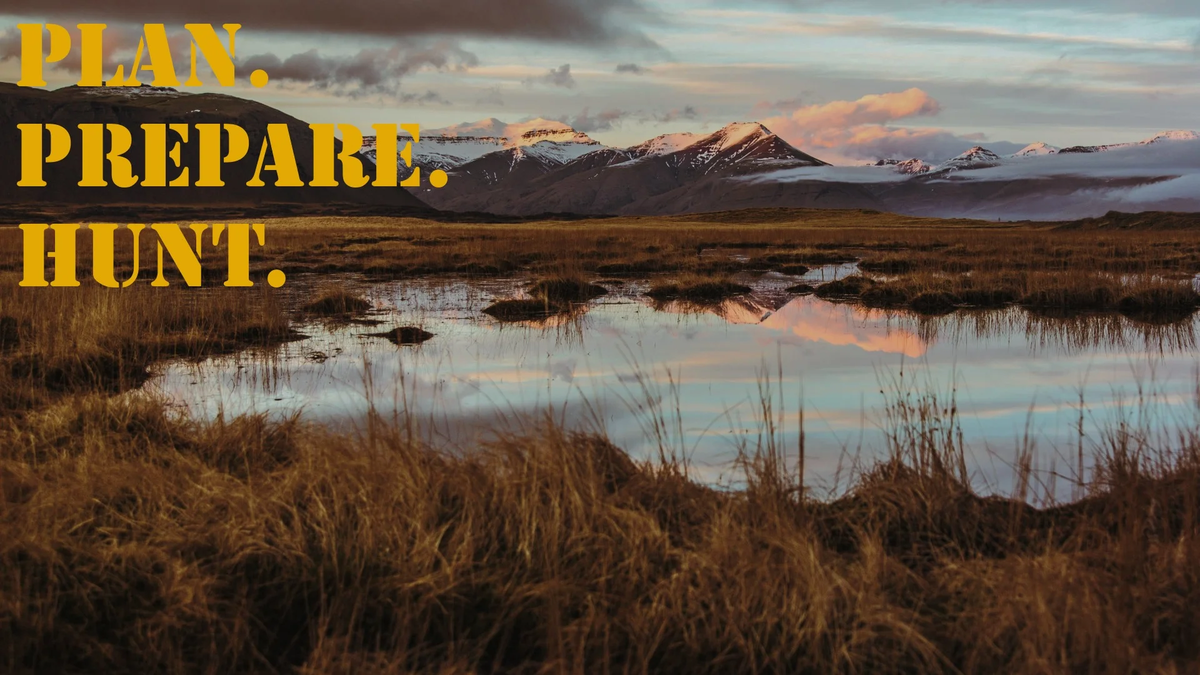
Theater of Operation
-Alaska, US
Slams & Awards
Grand Slam Club Ovis
-Super 10
-Super 25
-Super 40
-Super 50
-Super Slam
-Youth 3
Safari Club International
-Alternative Methods 24
-Animals of North America
-Animals of North America (Bow)
-Bears of the world
-Global Hunting Award
-Hunting Achievement Award
-Multiple Methods
-North American 12
-North American 29
-Predators of the world
-Top Ten Award
Records
Safari Club International
North America - Free Range
Firearms
Bronze - 25"
Silver - 26-4/16”
Gold - 27-12/16”
Bow
Bronze - 20”
Silver - 22-8/16”
Gold - 25”
Boone & Crockett Club
Awards - 26"
All-Time - 28"
Pope & Young
Records - 20"
Sources
Disclaimer: This content is provided for informational and entertainment purposes only. It may include personal opinions, user-generated input, or material created with the assistance of AI tools, and is not intended as professional advice of any kind. Tier 1 Sportsmen does not guarantee the accuracy, completeness, or reliability of any information provided. Always verify any hunting, safety, gear, or health-related information with qualified experts, and check all local laws and regulations before participating in any hunting activity. This site may contain copyrighted material, the use of which has not always been specifically authorized by the copyright owner. We believe that this constitutes a ‘fair use’ of the material in accordance with Title 17 U.S.C. Section 107. For full details, please review our Disclaimer, TOS, & Privacy Policy.