Description
American Plains Bison (Bison bison bison)
Once the dominant grazer of North America’s Great Plains, the American Plains Bison roamed in vast herds across prairies, rolling grasslands, and sagebrush basins. Stocky, powerful, and deeply adapted to open country, it features a massive hump, sweeping horns, and a dense, protective coat. Resilient and iconic, the Plains Bison represents both the grandeur of America’s natural heritage and one of conservation’s greatest comeback stories.
Aliases
Plains Bison
Plains Buffalo
American Buffalo
Prairie Bison
Associates
Mule Deer
Engagement Strategies
Blind Hunting
Spot & Stalk Hunting
Still Hunting
Effective Weapons
Centerfire Rifle
Compound Bow
Muzzle Loader
Recurve / Long Bow
Opportunity Assessment
Rating: Medium
Population
-Strong, well-managed populations across public herds, tribal lands, and private ranches.
-Numbers are stable to increasing due to conservation programs and regulated harvest.
Distribution
-Primarily found across the Great Plains, prairie preserves, tribal reservations, and managed grassland ecosystems.
-Occur in open prairie, mixed-grass plains, river breaks, and rolling grasslands with minimal timber.
Regulation
-Opportunities vary by location, including lottery draws, tribal hunts, conservation removals, and private-land tags.
-Most hunts are tightly regulated with limited tags to control herd size and genetics.
Demand
-Very high demand due to cultural significance, North American heritage, and meat value.
-Sought after by conservation-minded hunters, history-driven sportsmen, and GSCO-style challenge participants.
Quick Threat
Rating: Medium
Terrain
-Vast open prairie with little cover, requiring long stalks and careful use of terrain folds.
-Rolling grasslands and river breaks can hide bison until close, limiting approach options.
Weather
-Extreme temperature swings, high winds, and sudden storms are common on the plains.
-Heat, cold, and exposure can rapidly fatigue hunters during long approaches or recoveries.
Grit
-Large body size demands precise shot placement and mental discipline.
-Post-shot work is physically intense; field processing and pack-out require stamina and planning.
Conflict
-Bison are unpredictable, aggressive when pressured, and capable of sudden charges.
-Herd dynamics increase risk—nearby animals may react defensively during stalks or recovery.
Mission Critical Gear
Apparel
-Wind-resistant outer layers
-Insulated Layers
-Insulated gloves
-Waterproof outerwear
-Gaiters
Accessories
-Compass
-Physical Map
-Paracord
-Wind Checker
-Trekking Poles
Bait / Scent
Calls / Decoys
Dog / Falconry Gear
Electronics / Lights
-GPS
-Headlamp
Footwear
-Insulated, waterproof boots
Game Care Gear
-Extra-large, breathable game bags
Kitchen / Hydration Gear
-Insulated water bottles
-Water purification system
Knives / Tools
-Multiple heavy-duty
-Bone saw
-Multi-tool
-Knife sharpener
Nutrition
-Electrolyte supplements
Optics
-High-quality binoculars
-Range Finder
Packs / Bags
-Heavy-duty pack frame
Shelter / Sleep System
Stands / Blinds
Survival / Aid Gear
-First-aid Kit
-Fire Starter
-Emergency shelter
Watercraft
Skill Set Demands
-Shot placement
-Wind Reading
-Bison Behavior
-Trophy Care
-Cold-Weather
-Navigation
-Tracking
-Stalking
-Team Coordination
-Physical Fitness
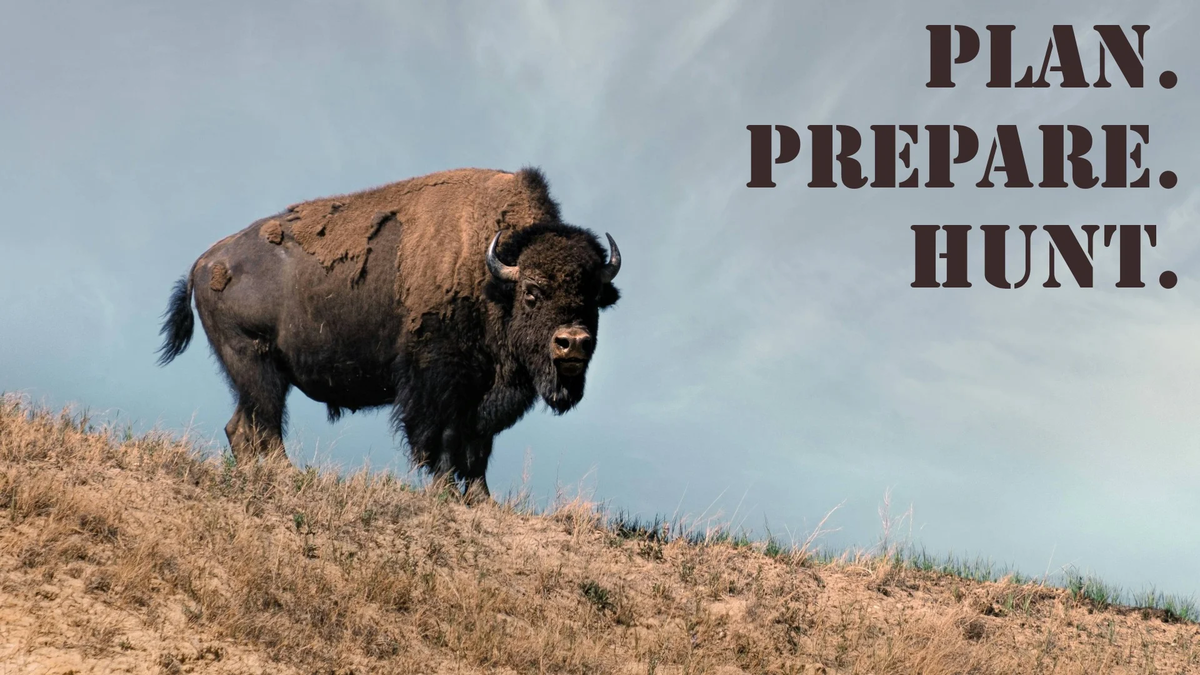
Physical Characteristics
Massive Shoulder Hump
A tall, muscular hump over the front shoulders formed by elongated vertebrae, far more pronounced than in cattle or other bovids.
Heavy Forequarter & Sloped Backline
Enormous chest, shoulders, and neck with a steeply sloped back that drops toward smaller hindquarters, giving the bison its unmistakable profile.
Dense Mane & Beard
Thick, shaggy hair on the head, neck, shoulders, and forelegs, often forming a heavy beard and foreleg “chaps,” unlike any domestic cattle breed.
Short, Upcurved Black Horns
Relatively short, thick horns that curve upward and slightly inward from the sides of the skull, present on both bulls and cows and darker than those of most cattle species.
Characteristics of a Trophy
Exaggerated Physical Traits
Mature Plains bison bulls show massive, blocky heads, deep forequarters, and a pronounced hump, far bulkier and more muscular than younger bulls or cows.
Defined Bosses
Trophy bulls exhibit thick horn bases, deep sweeping curves, and strong tips; although shorter than sheep horns, the mass and symmetry define trophy quality.
Thick Cape
The “cape” (mane and shoulder wool) becomes fuller, darker, and more rugged with age.
Maturity
Older bulls move with a slower, heavier gait and display a broader skull, deeper beard, and thicker dewlap than younger animals.
Diet
Grasses
-Bluejoint reedgrass
-Fescues
-Sedges (Carex spp.)
-Wheatgrasses
-Bluegrass species
-Timothy
-Switchgrass
Forbs
-Fireweed
-Asters
-Goldenrod
-Clover species
-Prairie coneflower
-Willowherb
Browse
-Willow shoots
-Shrub rose
-Dogwood saplings
-Snowberry
-Young balsam poplar shoots
Minerals
-Natural mineral flats
-Exposed soils
-Ash beds
Prairie salt licks rich in sodium, calcium, and trace minerals.
Field Behavioral Patterns
General Social Dynamics
-American Plains Bison live in large, fluid herds shaped by open grassland ecosystems, seasonal forage cycles, and historical migration patterns.
-Cows, calves, and young bulls form the core herd, while mature bulls spend much of the year alone or in small bachelor groups, returning only for the rut.
-Herds center around the best prairie forage, wallow sites, and dependable water sources, shifting their location as grass quality changes across the seasons.
-Social hierarchy is strongly defined; dominant bulls assert rank through posturing, bellowing, wallowing, and short, powerful horn clashes during the breeding season.
Reproductive Behavior
-Rut occurs from July–September, marked by deep grunts, wallowing, dominance displays, and persistent “tending” of cows by mature bulls.
-Calving occurs April–June, timed to coincide with nutrient-rich spring green-up.
-Cows form protective maternal groups on open prairie or lightly broken terrain, relying on group vigilance rather than rugged escape features.
-Bulls compete through head-to-head pushing matches, horn hooking, and intimidation displays, rarely escalating to the lethal levels seen in some ungulates.
Movement Patterns
-Most active at dawn and dusk, bison move between feeding meadows, water sources, and bedding areas across wide, open landscapes.
-Herds often graze into the wind, using scent and visibility to detect predators at long distances.
-During heat, bison retreat to shade pockets, cottonwood bottoms, river draws, or lie in open areas where breezes keep insects down.
-Winter movement follows wind-blown ridgelines, burned grass patches, and areas where bison can paw or sweep snow aside to reach forage.
-Seasonal shifts may cover many miles, especially in free-ranging herds with access to large prairies or mixed-grass ecosystems.
Human & Hunting Pressure
-Free-ranging bison quickly become wary under pressure; herd movement can accelerate rapidly and cover miles once alerted.
-Their long-distance visibility and strong herd cohesion mean that once a group is spooked, opportunities often vanish quickly.
-Over-pressured herds shift to bedding in windier areas, moving at night or feeding on more remote parts of the range.
-Hunting presence, especially repeated disturbance, often makes mature bulls peel away from cow groups earlier and remain isolated in rougher coulees, breaks, or timbered edges.
Reconnaissance
Morning
-Glass open prairie, river bottoms, and broad grazing flats at first light as herds move from night bedding to feed.
-Focus on downwind edges of feeding areas where bison transition slowly and predictably.
-Identify herd structure early—bulls, cows, calves, and satellite animals—before planning any approach.
-Use low rises, coulees, and shallow draws to observe without silhouetting yourself.
Mid-Day
-Monitor bedding areas on gentle slopes, lee sides of ridges, or near water where bison loaf and ruminate.
-Track wind shifts carefully; thermals and steady plains winds dictate safe approach routes.
-Watch for lone or peripheral bulls drifting away from main herds during rest periods.
-Confirm escape routes, terrain obstacles, and safe shooting lanes well before engagement.
Evening
-Reposition to feeding grounds, travel corridors, and water sources as herds begin moving again.
-Glass long distances to catch subtle movement—bison often rise slowly and feed methodically.
-Anticipate direction of travel rather than chasing movement; bison follow habitual routes.
-Set up early, allowing time for wind stabilization and a controlled final approach.
Tips
-Wind is the primary factor—always plan approaches with steady crosswinds or headwinds.
-Use terrain folds, shallow drainages, and vegetation lines for concealment; avoid skyline exposure.
-Study herd behavior—agitated animals, tail flicking, or head swinging signal rising awareness.
-Patience beats speed; slow, deliberate reconnaissance reduces risk around large, unpredictable animals.
-Identify safe shot angles that avoid herd congestion and ensure a clear backstop.
Theater of Operation
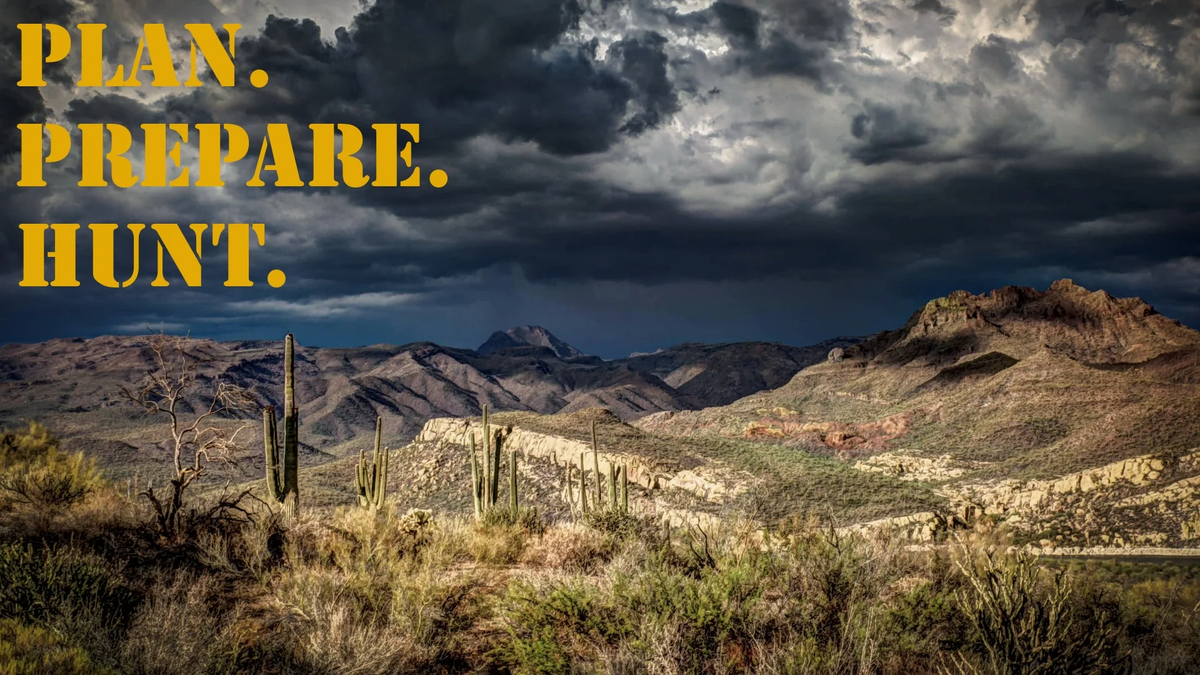
-Arizona, US
-Montana, US
-South Dakota, US
-Utah, US
-Wyoming, US
-British Columbia, CA
-Saskatchewan, CA
Slams & Awards
Grand Slam Club Ovis
Qualifies under Bison
-Super 10
-Super 25
-Super 40
-Super 50
-Super Slam
-Youth 3
Safari Club International
-Alternative Methods 24
-Animals of North America
-Animals of North America (Bow)
-Global Hunting Award
-Hunting Achievement Award
-Introduced Animals of Africa
-Multiple Methods
-North American 12
-North American 29
-Top Ten Award
-Wild Oxen of the World
Records
Safari Club International
North America - Estate
Firearms
Bronze - 54"
Silver - 59-7/8"
Gold - 64-6/8”
Bow
Bronze - 46"
Silver - 59-2/8"
Gold - 63-6/8"
North America - Free Range
Firearms
Bronze - 54"
Silver - 61-1/8"
Gold - 66-1/8”
Bow
Bronze - 48"
Silver - 59-6/8"
Gold - 64-1/8"
Boone & Crockett Club
Qualifies under Bison
Typical
Awards - 115"
All-Time - 115"
Pope & Young
Qualifies under Bison
Typical
Records - 100"
Sources
Disclaimer: This content is provided for informational and entertainment purposes only. It may include personal opinions, user-generated input, or material created with the assistance of AI tools, and is not intended as professional advice of any kind. Tier 1 Sportsmen does not guarantee the accuracy, completeness, or reliability of any information provided. Always verify any hunting, safety, gear, or health-related information with qualified experts, and check all local laws and regulations before participating in any hunting activity. This site may contain copyrighted material, the use of which has not always been specifically authorized by the copyright owner. We believe that this constitutes a ‘fair use’ of the material in accordance with Title 17 U.S.C. Section 107. For full details, please review our Disclaimer, TOS, & Privacy Policy.